
Statement Entrance Pots for Homes and Estates, Getting the Scale Right
The entrance sets the tone for everything that follows. Here's how to choose entrance planters that look right, hold up to foot traffic and weather, and don't need replacing in three years.
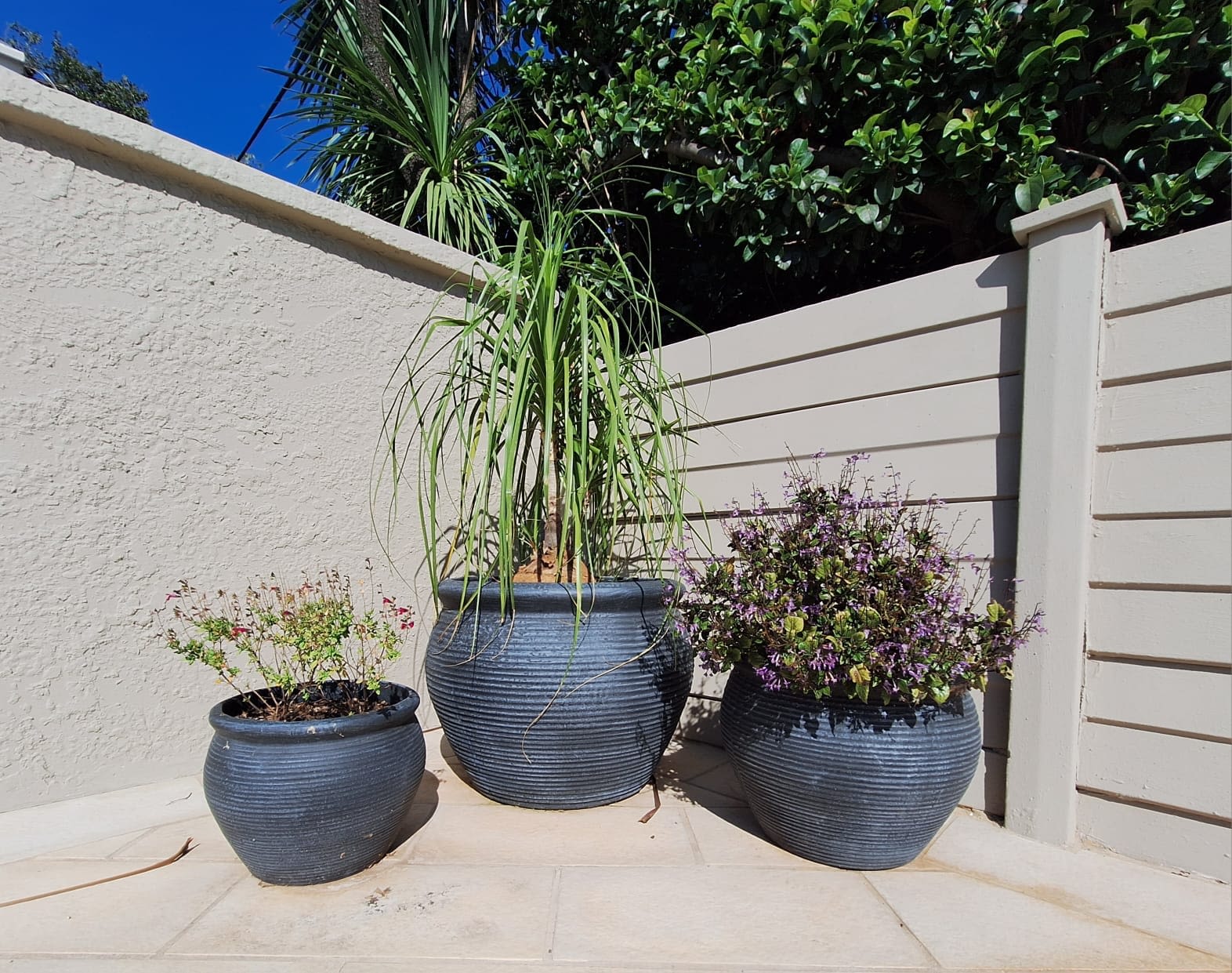
The entrance to a home or an estate is the first thing visitors see, and the first impression is almost never about the architecture, it's about the planting. A well-planted entrance says "this place is cared for." The wrong pot, or a pot that's deteriorated, says the opposite.
Here's how to get entrance planters right the first time.
Scale Is Everything
The most common mistake is undersizing. A 30cm terracotta pot next to a double-volume front door looks like a mistake. The entrance has its own scale, you need to match it.
A general rule: the pot should be at least one-third the height of the doorframe for a single pot, or two-thirds the height if you're doing a flanking pair. For an estate gate, scale up further, the pot needs to read from the road, not just from 2 metres away.
Residential entrance: A single 70 to 90cm pot on each side of the door, or a 1m statement pot as a single focal point.
Estate entrance gate: Pair of 80 to 100cm pots (or larger) placed just inside the gate. The size needs to register from a car travelling at 20 to 30km/h.
Commercial or hotel entrance: 100 to 120cm pots, ideally with plants that grow to 1.5 to 2m above the pot rim. The combination of pot + plant needs to read at arrival speed.
Choosing the Right Plant
The plant amplifies the pot. For an entrance you want something:
- Structurally distinct, not just greenery, but a shape. Agapanthus (round and architectural), Bird of Paradise (striking leaves), or a standard-form ficus ball all work.
- Evergreen or nearly so, an entrance planter that looks great in November and bare in July is a bad trade.
- South African climate-appropriate, if you're in Gauteng, it needs to handle frost. Agapanthus, Strelitzia, and Buxus all do. Fiddle-leaf figs don't.
- Low-maintenance, entrance planters are high-visibility and often under-attended. Choose plants that forgive missed watering and don't need weekly deadheading.
Material for Entrance Pots
Entrance pots take abuse: frost, UV, wind, the odd football from the neighbours, and sometimes vandalism. This rules out most materials.
Terracotta cracks in frost and deteriorates in UV. Two or three Highveld winters and a decent entrance pot looks tired.
Fibreglass is light, too light for a large entrance pot that needs to stay put. It also ages poorly in direct sun, yellowing or becoming chalky.
Solid concrete works structurally but is extremely heavy. A 90cm solid concrete pot can weigh 80kg+. Moving it for maintenance, cleaning, or replanting is a project.
GRC (glass-reinforced concrete) is the standard choice for quality entrance installations. Frost-resistant, UV-stable, structurally sound, and one-third the weight of solid concrete. A 90cm GRC pot weighs 18 to 22kg, movable by two adults without equipment.
At Pots For Grabs, we manufacture GRC entrance pots in a range of sizes and finishes (grey, charcoal, white, terracotta-effect) that hold their appearance year after year.
For Estate and Development Projects
If you're specifying entrance planters for a residential estate, retirement village, or commercial development, there are additional considerations:
- Consistency across multiple entrances, we manufacture to order from the same mould, so 20 pots at 20 gates match exactly
- Longevity, homeowners' associations don't want to revisit this decision in five years
- Vandal resistance, GRC doesn't dent or shatter under impact the way fibreglass or terracotta does
- Weight for stability, heavy enough not to tip, light enough to reposition for maintenance
We work with estate developers and HOAs directly. Trade pricing is available after a one-day verification, apply here or WhatsApp us at 069 592 0794 to discuss your project.
Maintenance
Entrance pots are the most visible and often the most neglected. A few things that keep them looking good year-round:
- Drainage is non-negotiable. A pot without drainage holes or with blocked holes will kill plants and eventually crack even a GRC pot from root pressure.
- Annual repotting (or at minimum, top-dressing with fresh compost) keeps the soil healthy and the plant vigorous.
- Frost protection for the plant, not the pot. GRC handles frost fine. The plants may not. A layer of fleece over the plant (not the pot) on hard frost nights protects what's in the ground.
See our full range of statement planters at potsforgrabs.co.za/shop/category/statement-planters.
Still sizing up your options? Our guide to large outdoor planters compares materials, sizes, and prices across the South African market.
Related reading
Looking for new pots?
Browse our full range of GRC fiber cement garden pots, delivered across Gauteng or collected free.
Shop All Products →