
Why GRC Pots Survive Highveld Frost (and Clay Doesn't)
Every Joburg winter we replace cracked clay pots for new customers. Here's the physics behind why GRC handles frost when nothing else does.
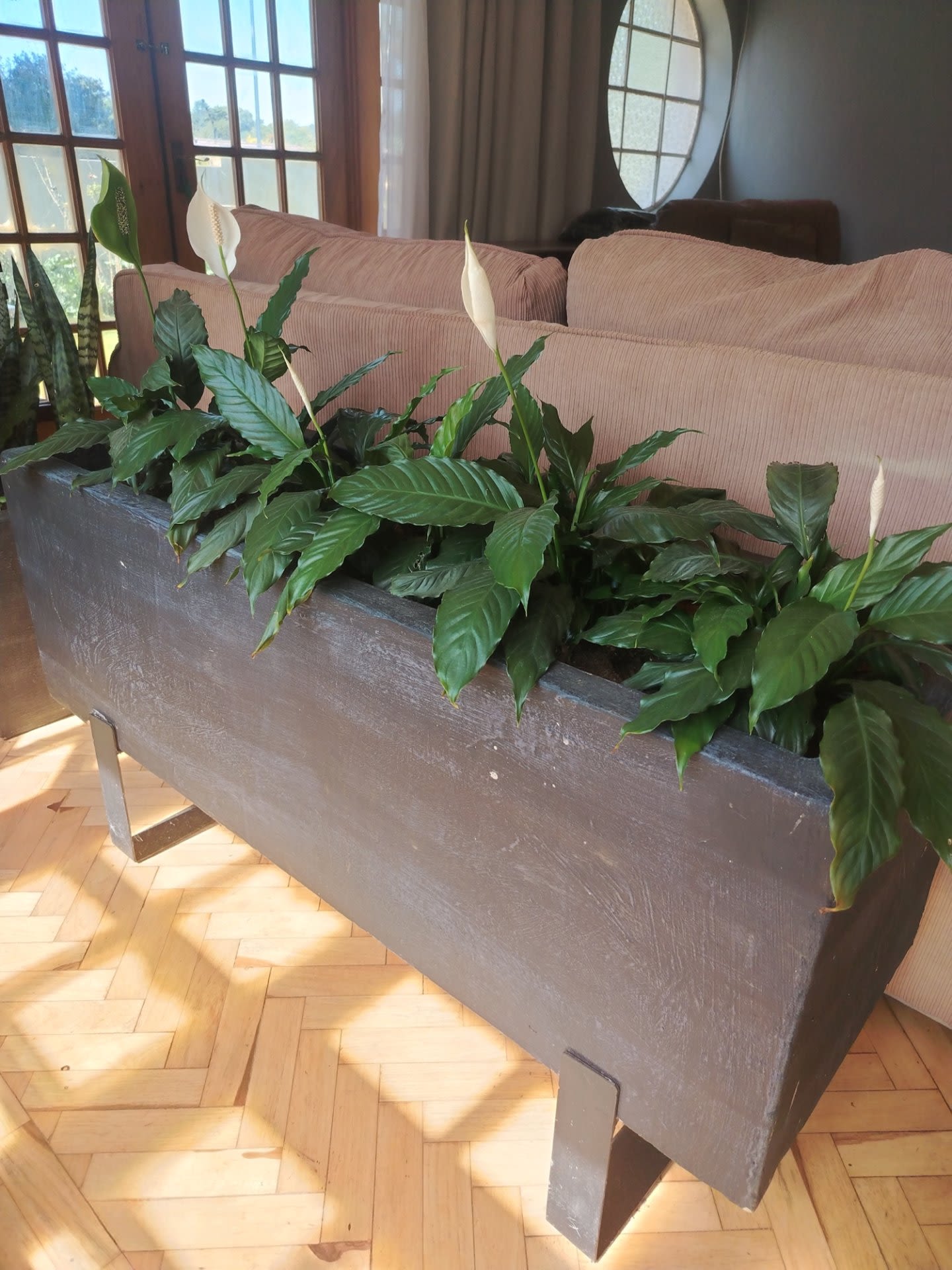
If you've lived through a few Joburg or Pretoria winters, you've probably walked outside in July to find a pot split from rim to base. Here's exactly why it happens, and why GRC fiber cement doesn't have the problem.
What actually causes frost cracks
Pot walls aren't solid. Even concrete and clay have microscopic pores that soak up water from the soil and from rain. When temperatures drop below zero overnight, that water inside the wall freezes.
Water expands by about 9% when it freezes. The wall material can't expand with it, so something has to give, and the wall splits.
Highveld winters give us the worst version of this: clear nights drop to -4 °C while sunny days hit +18 °C, so the freeze-thaw cycle repeats 30+ times per winter. Each cycle widens the crack a little more.
Why GRC is different
GRC fiber cement solves the frost-crack problem in two ways:
1. Lower porosity. GRC's mix is denser than terracotta. Less water gets into the wall in the first place.
2. Fiber reinforcement. Even when freezing does push outward, the glass fibers running through the entire wall act like a tension net. Where clay or plain concrete would crack, GRC flexes by a fraction of a millimetre and springs back.
The acid test
We've left GRC pots outside through five Joburg winters with soil and plants in them, never moved, never covered. Zero cracks. The same period broke every clay pot in the same garden.
What about painted concrete?
Painted concrete pots survive longer than clay because the paint slows water from entering the wall. But the paint itself fails, UV, soil acidity, and physical knocks chip it away. After 2 to 3 years the wall is exposed and the cracks start.
GRC's pigment is mixed into the body, so there's no paint to fail.
Should you cover pots in winter?
If you have clay or thin concrete pots: yes, ideally. Wrap them in hessian or move them under cover.
If you have GRC: no, you don't need to. Just water as normal, the plant needs less in winter but the pot can handle whatever the weather throws at it.
Related reading
Looking for new pots?
Browse our full range of GRC fiber cement garden pots, delivered across Gauteng or collected free.
Shop All Products →